
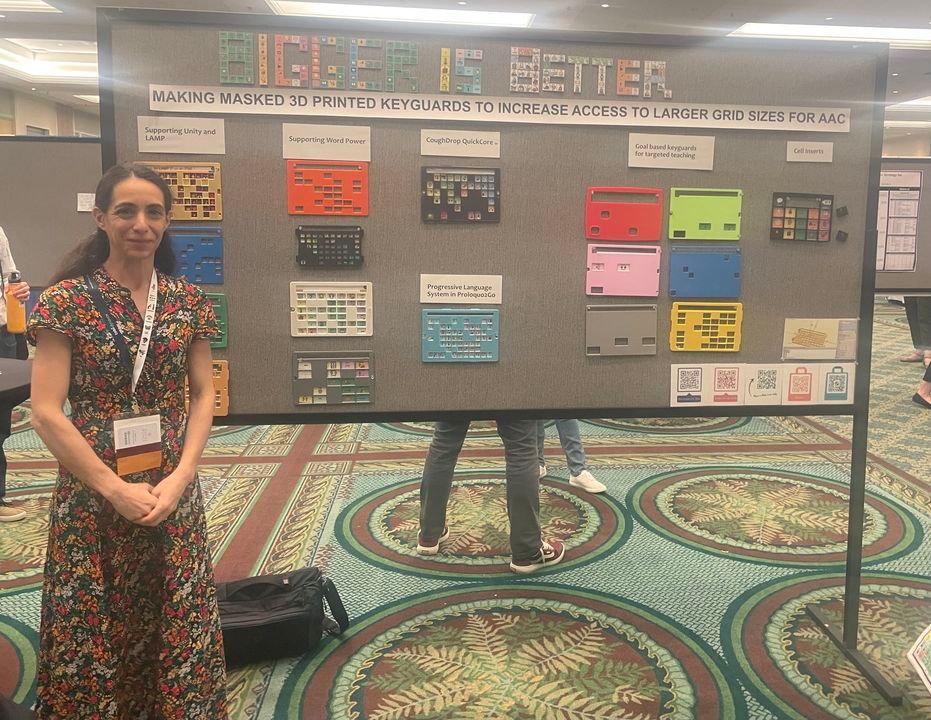
Using 3-D printing to create custom keyguards with masked cells produces a keyguard that has had benefits for teaching AAC. A large grid size when introduced early is AAC best practice but can often appear overwhelming to students and teams. Use of masked keyguards provides physical support to develop consistent motor plans and reduces the visual field.
Examples of assistive technology for AAC applications and devices that have been created using masked keyguards were presented recently at the Assistive Technology Industry Association (ATIA) in Orlando by Gemma White, WIHD’s Assistive Technology Program’s Clinical Coordinator.